The same boring infrastructure. Different data, every time.
We work across industries where structured data directly impacts decisions. Power BI dashboards, data engineering pipelines, and cloud infrastructure: the problems are different, the approach is the same.
// Where we work
Where we work.
Live means we have active client work in this sector. Available means we're ready for it.
Every industry has the same underlying problem: data that exists but can't be trusted. BoringBI builds the Power BI dashboards, data engineering pipelines, and cloud infrastructure that fix that foundation, whatever sector you operate in.
// Live
Construction & Project Management
A subcontractor overrun nobody catches until the job's already over budget. Job costing, project tracking, and subcontractor visibility from scattered site data, built for firms running multiple projects without a central view.
Metrics: Cost Variance · Project Profitability · Subcontractor Performance · Budget vs Actual · Schedule Variance
An SLA miss you find out about from the client, not your own dashboard. Power BI reporting built directly on SAP EWM and SAP HANA: no translation layer, no delay.
A line running below OEE for weeks before anyone notices on paper. Production volume, OEE, inventory turns, and on-time delivery connected to Power BI for live production reporting.
Metrics: OEE · Production Volume · Inventory Turnover · On-Time Delivery · Cost of Goods Sold
Power BI
Azure Data Factory
OEE
Inventory
// Available
SaaS
Churn creeping up quietly while the board deck still shows last quarter's good news. MRR, ARR, churn, CAC, and NRR in a single semantic model: numbers leadership can steer on, not just report.
A quiet Tuesday nobody planned staffing around, or a sold-out event nobody repeated because no one tracked why it worked. Footfall, revenue per cover, and event performance without the corporate overhead.
// Cross-industry. A capability, not a sector: it applies to any of the industries here.
SSRS, SSIS, SAP BusinessObjects, and Excel reporting moved to Power BI, Microsoft Fabric, and Databricks. Assessed first, migrated without breaking what's already running.
Metrics: Report Usage Coverage · Pipeline Migration Status · Data Parity Validation · Cutover Readiness · Legacy Decommission Rate
One client, one real project. It started with messy data and no reporting framework.
Oakwood FortConstruction & Project Management
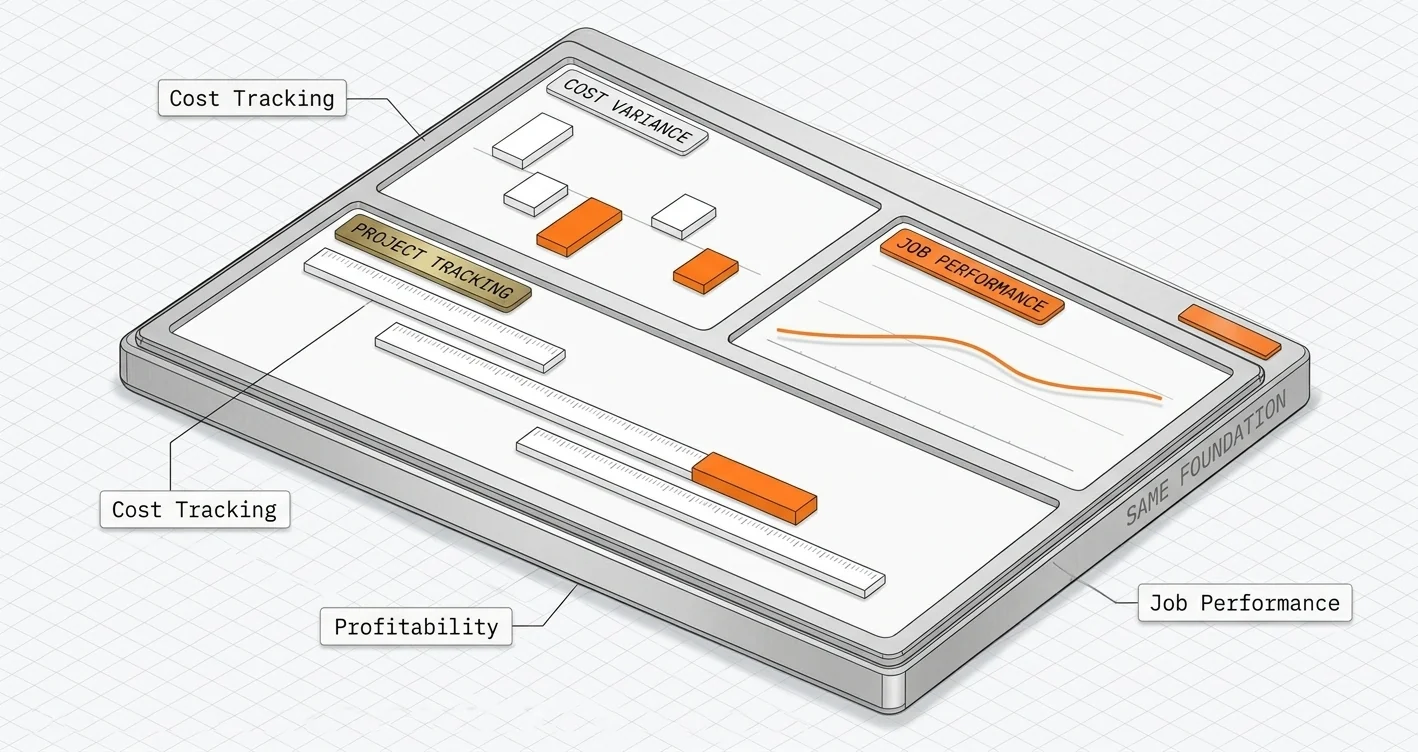
Project visibility across a multi-job construction firm
Scattered project data with no central view. Oakwood Fort needed to track job performance, costs, and timelines in one place without building an internal data function.
"They structured our project data and built reporting we actually use day to day."
// Illustrative layout only. Not Oakwood Fort data or results.
// How we approach different industries
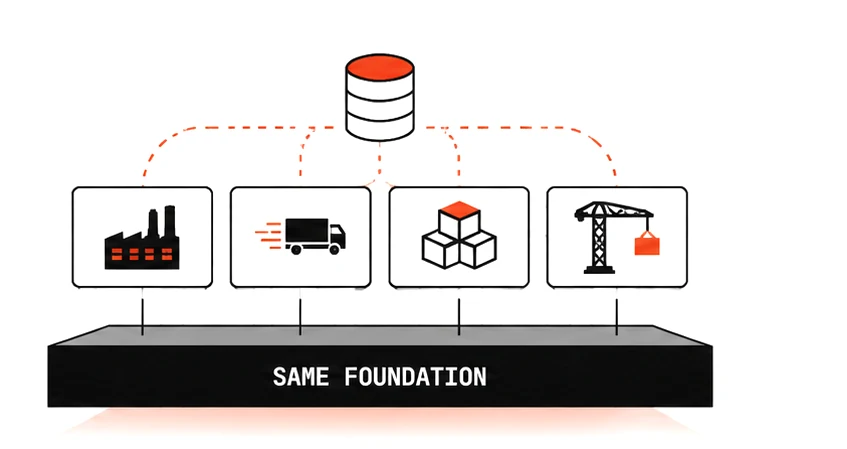
Different metrics. Same foundation.
What gets measured changes from sector to sector. What sits underneath it doesn't: sector metrics sit on top of the same reliable route from source data to a decision.
ConstructionCost Variance
LogisticsSLA Compliance
ManufacturingOEE
SaaSChurn Rate
HospitalityRevenue per Cover
MigrationData Parity Validation
Data sources
Pipelines
Models
Reporting
Decisions
// Sector directory
Everything in one place.
Sector
Typical challenges
Technologies
Explore
Construction & Project Management// Live
A subcontractor overrun nobody catches until the job's already over budget.